
I cancelled my $300-a-month facials in March. Here's what eight weeks of doing it at home actually looked like.
Not a miracle, not a disaster — a fairly boring routine that produced a result I did not expect, and one side effect nobody warned me about.

For about three years I spent roughly $300 a month on facials. LED, microcurrent, whatever the clinic was pushing that season. I liked going. I liked the hour of nobody being able to reach me.
What I could not honestly tell you is whether it worked, because I never stopped long enough to find out. That is the awkward thing about a standing monthly appointment — there is no control group.
In February the clinic put their prices up again and I did the sum for the year. It was more than my car insurance and my energy bill combined. So I cancelled, and I bought a red light panel for the price of a single session, and I decided to be reasonably rigorous about it.
What red light therapy actually is, minus the marketing
It is light in the roughly 630–850 nanometre range — deep red through to near-infrared — held against the skin for a set number of minutes.
The mechanism people cite is that light in this band is absorbed by mitochondria, which is a real and well-documented effect. What is much less settled is how far that translates into visible changes in skin at the doses a home device delivers, over the timescales people claim.
I went in assuming the honest answer was "somewhat, slowly, and less than the adverts suggest." I still think that is the honest answer.
The clinic version is the same light. What you are paying for is the room, the towel and the person applying it.
The routine, in full
Ten minutes, most evenings, after cleansing and before anything else went on. No serum underneath, because most of what I own is water-based and I did not want to guess at how it interacted.
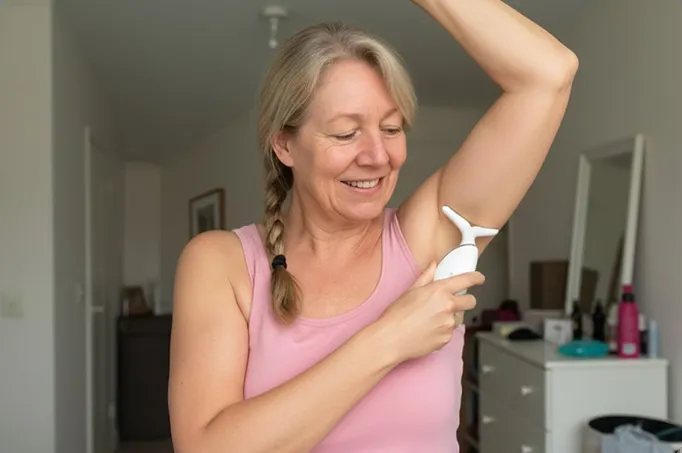
I kept the same cleanser, the same moisturiser and the same SPF throughout, specifically so that the light was the only thing that changed. I also photographed my face under the same bathroom light every Sunday, which felt ridiculous and turned out to be the only reason I can say anything useful at all.
Week by week
-
Week 1
Nothing. Genuinely nothing.
If you are expecting a first-week result you will be disappointed and probably stop. The only change was that my skin felt slightly warm afterwards.
-
Weeks 2–3
Texture, before anything else
The first real difference was how makeup sat — less catching around the nose and chin. My skin looked less tired in photographs before it looked any different in the mirror.
-
Weeks 4–6
Tone evened out
Two patches of post-acne pigmentation on my jaw faded noticeably. This is the change I am most confident about because it is visible in the Sunday photos rather than being a matter of how I felt that day.
-
Weeks 7–8
A plateau, and a habit
Progress flattened. What did not flatten was compliance — ten minutes had become automatic in a way that a monthly appointment never was.
The side effect nobody mentioned
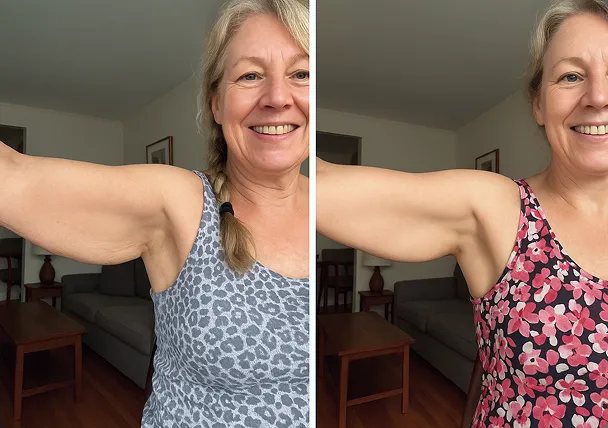
Doing this every evening made me pay attention to my skin in a way that a monthly appointment did not.
I started actually wearing SPF daily, because I was looking closely enough to care. I stopped picking. I noticed within days rather than weeks when something disagreed with me. I suspect a meaningful share of the improvement belongs to that, not to the light — and I would rather say so than pretend otherwise.
Home device versus clinic — the honest comparison
| At home | Clinic course | |
|---|---|---|
| Cost, first year | One device | ~12 sessions |
| Power output | Lower | Higher |
| Sessions per month | 20–30 | 1–2 |
| Consistency | Depends on you | Depends on diary |
| Professional assessment | None | Included |
| Travel time | None | Real |
A clinic panel is more powerful than anything sold for home use, and that is not marketing — it is the actual difference. What a home device has instead is frequency. Twenty short sessions a month at lower output is a different proposition to one strong session, and for pigmentation and texture I think frequency won.
If you have an active skin condition, or you are considering this for anything medical, see a dermatologist rather than reading a page like this one.
What it replaced, and what it didn't
It has not replaced sun protection, sleep, or the fact that I am forty-four. It has not done anything for the two lines between my eyebrows, which I suspect need a needle or nothing.
What it replaced is $3,600 a year and a standing Thursday appointment, in exchange for ten minutes in my own bathroom and a result I would describe as modest, real, and mine to keep going with.
Reader offer
At-home red light therapy device
$49 $129 60% off
- 630–850nm range
- 10-minute sessions
- 60-day returns
Free shipping on all US orders.
What other readers said
“Six weeks in. The redness across my cheeks is the calmest it has been in years. I was sceptical and I am still slightly sceptical, but I am not stopping.”
“Does what it says but you have to actually use it. Mine sat in a drawer for a month and unsurprisingly did nothing from in there.”
“Honestly I can't see a difference at eight weeks. My partner says he can. Keeping it for now but I wouldn't call it transformative.”